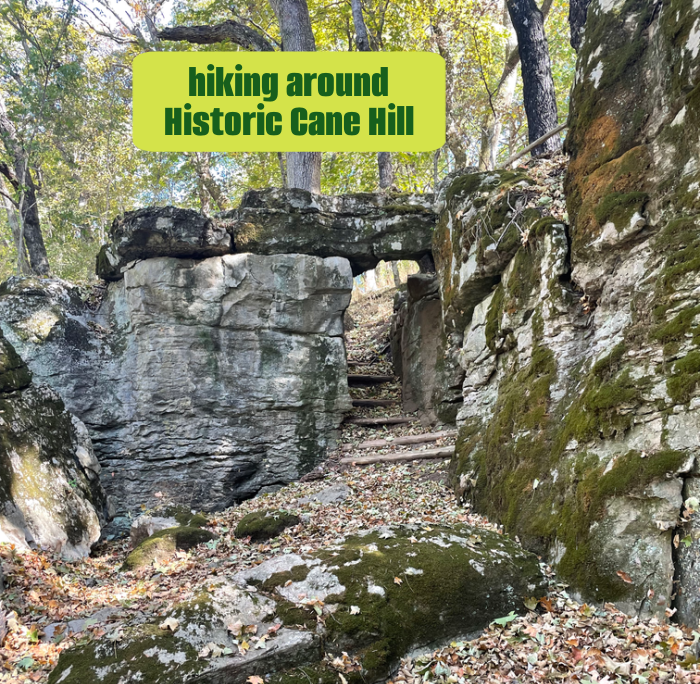
I planned to post about our hike around historic Cane Hill closer to when said hike happened, but lo and behold time is a big ole’ thief and I’m just getting around to it. We drove over to Cane Hill back in October when the Smithsonian Institution’s traveling exhibit “Habitat” was on display. That exhibit has traveled elsewhere now but the good news is the trails have been there for some time, long before the exhibit. They are nicely marked, and they aren’t going anywhere. So, you can still enjoy this lovely hike when you need a break from the hustle and bustle of life.
I am always astounded that such Ozark beauty exists right off the highway.
And I’m astounded that I live here.
Nurse Logs
Are you familiar with nurse logs?
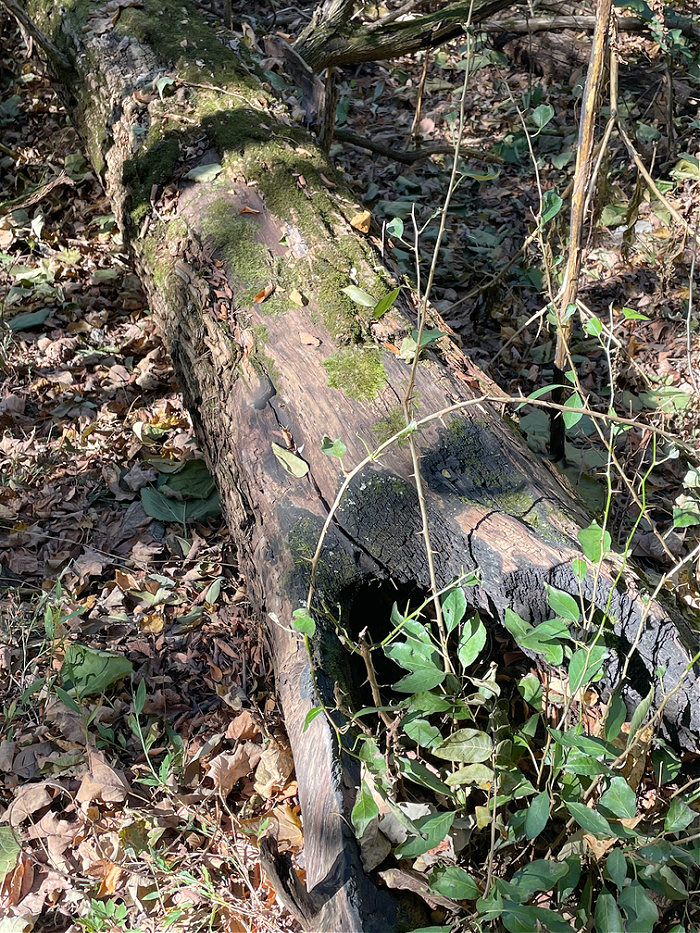
You probably are even though the phrase may be unfamiliar.
Nurse logs are fallen logs decomposing in the woods. Decaying logs are not only teeming with life (fungus, moss, ferns, etc.) but while they are quietly decomposing, they are providing support and vital nutrients to baby tree seedlings, hence the idea ‘nursing’ the seedlings.
We’ve all seen trees growing out of an old stump? Nurse stumps, nurse logs—the process is the same.
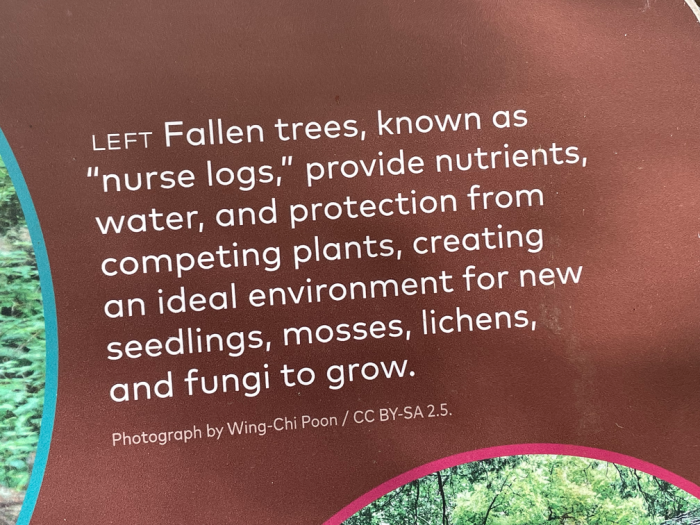
There are several key things that make nurse logs important to seedlings.
- A seedling growing on decaying wood has easier access to fungus and other nutrients;
- Because the seedling begins to grow on top of a log, it likely gets more sunlight than a seedling that falls directly onto the ground and is hidden beneath leaf litter and fern fronds;
- Seedlings that root in decaying wood draw moisture from the wood, even in times of drought; and,
- Seedlings growing on a nurse log may be subject to less pathogens than those growing in soil.
So Much Nature!
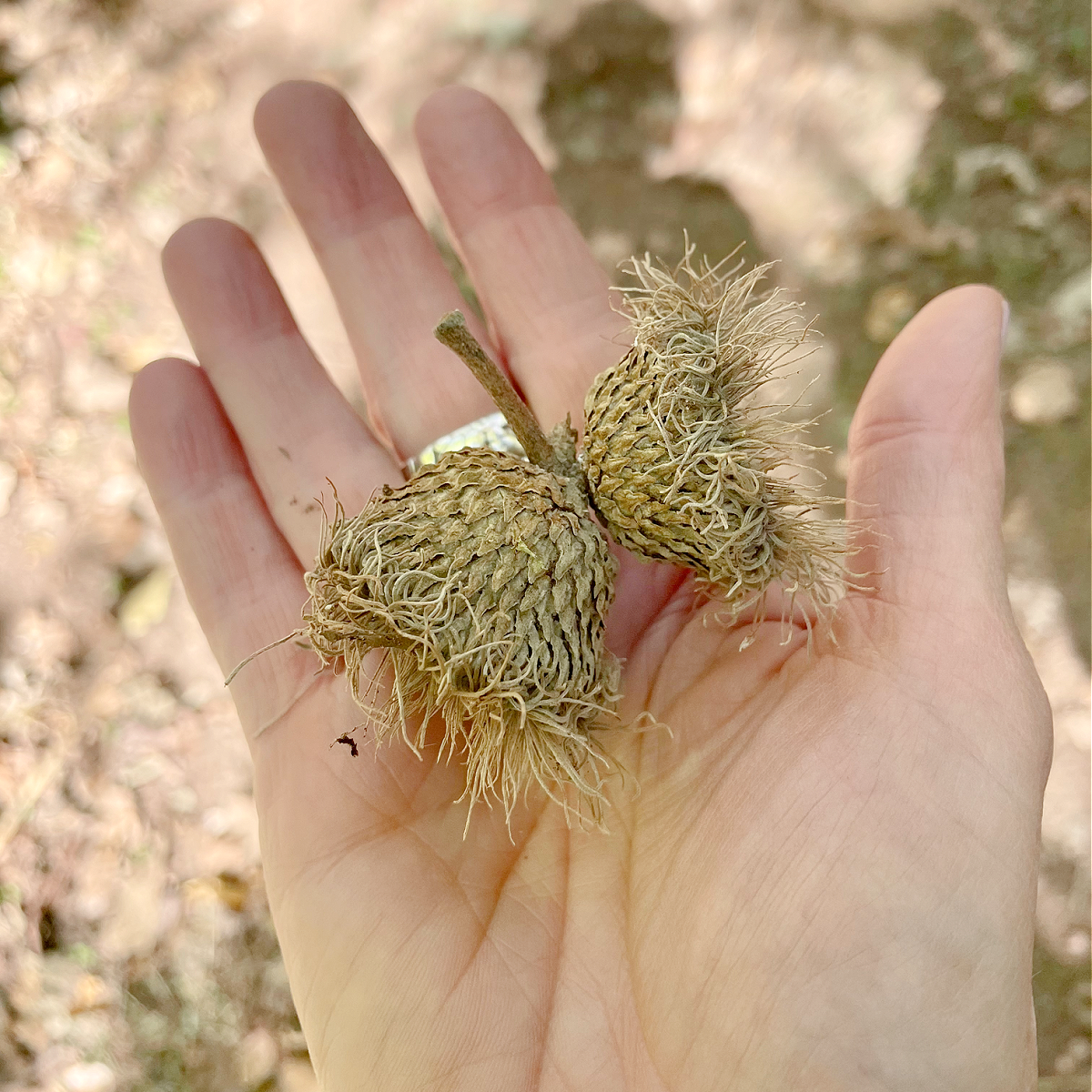
Bur Oaks are one of my favorite trees because I think their acorns have so much personality.
Fall color was putting on a show when we were there.

So were the pollinators. (Click below to see some fancy slow motion butterfly business.)
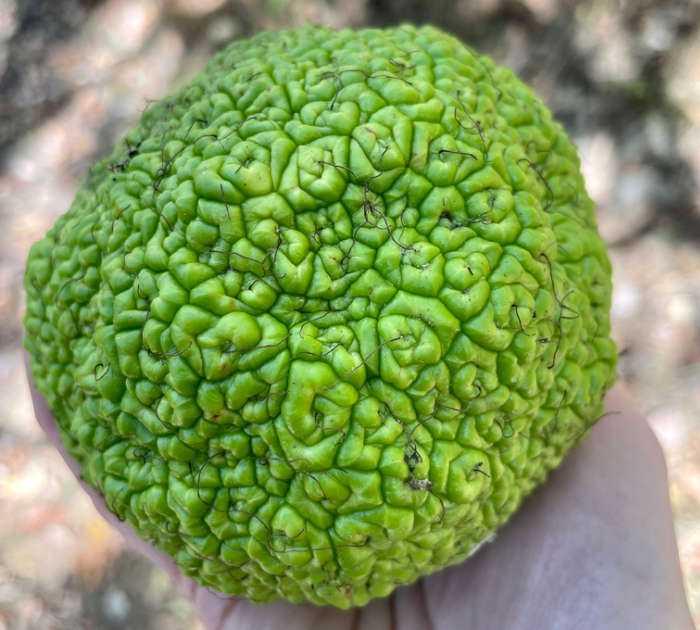
Question: If a horse apple falls in the woods and no one hears it, does it make a sound? Answer: Yes. Yes it does.
Bracket Fungi
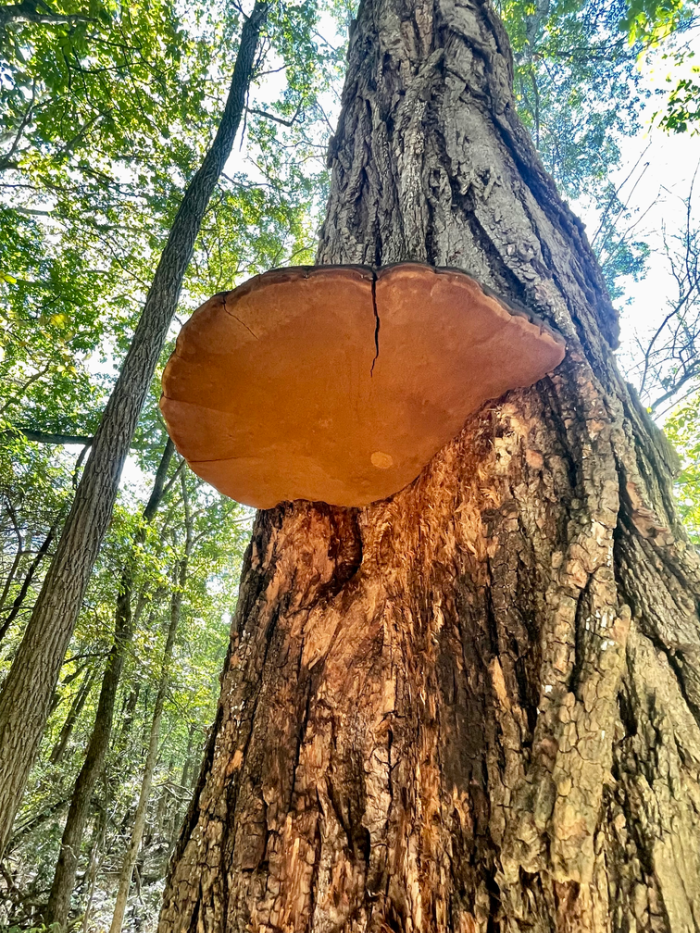
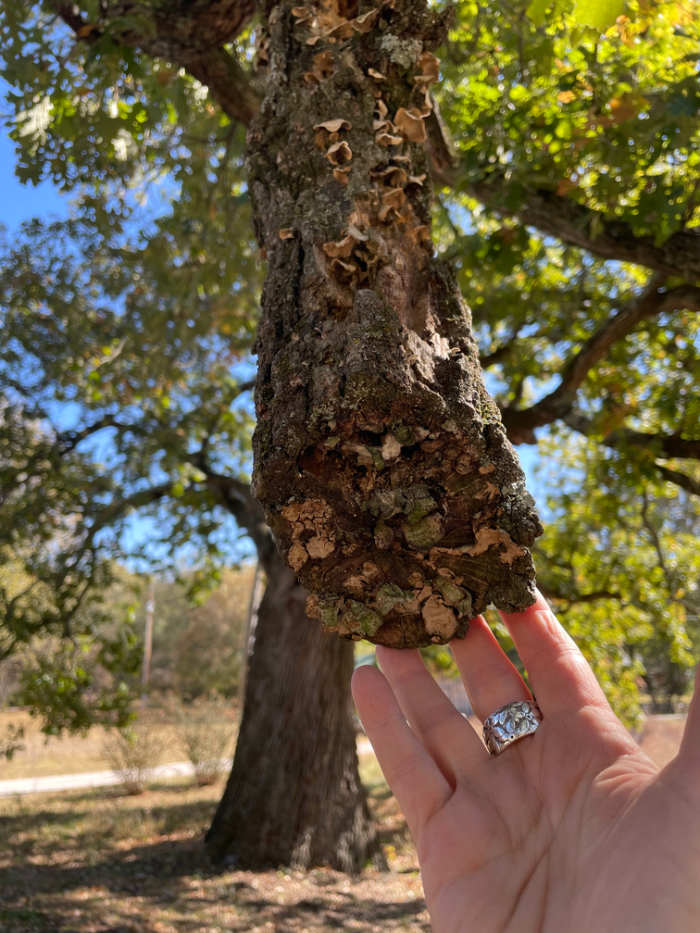
I saw lots of bracket fungi on several trees around Cane Hill. Bracket fungus is a polypore, and there are thousands of species. (I’m far from an expert on fungi, so take everything I say about this topic with the proverbial grain of salt.)
Bracket fungi feed on the heartwood of a tree, and there’s really not much a person can do about these growths. They are slow growers and by the time they are as large as the ones in these photos, they have been at work for decades. I say just enjoy them; they look pretty cool and they definitely have their place in the plant kingdom.
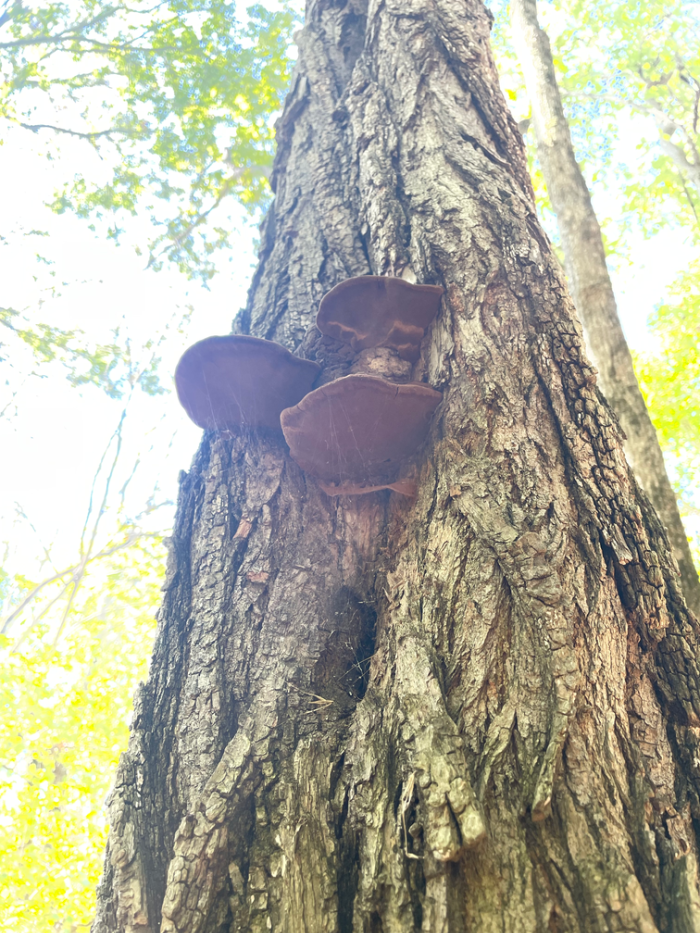
Something you can’t tell from the picture, bracket fungi is hard, like a wooden shelf.
Cane Hill Architecture and History
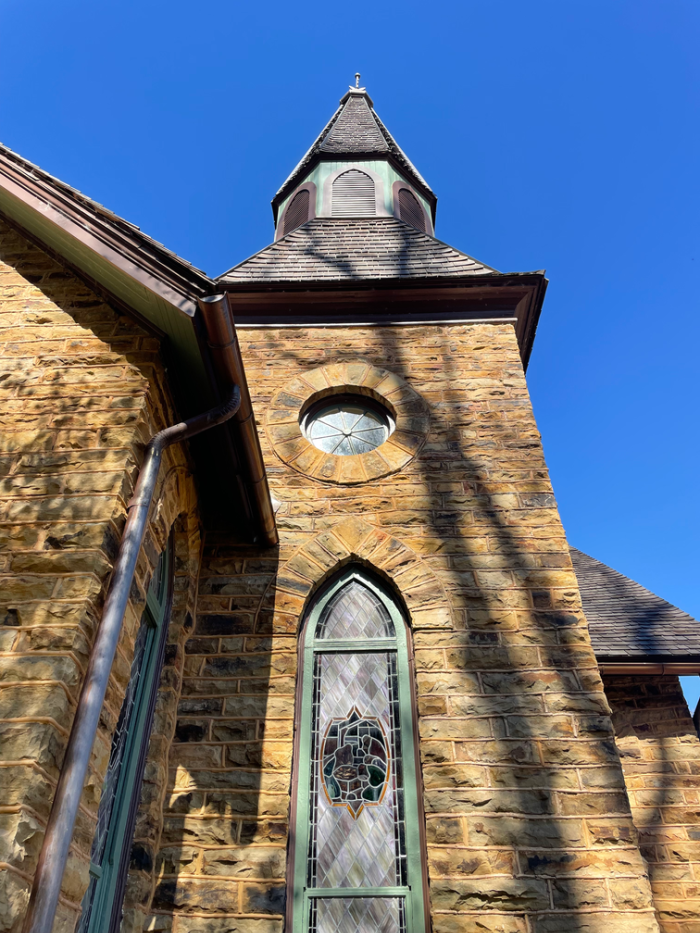
The small town of Cane Hill has thirteen properties listed on the National Register of Historic Properties. The town was founded by Cumberland Presbyterians from Tennessee. The Presbyterian church was built in 1891 and renovated in 2020.
It is gorgeous!
The first college in Arkansas was established in Cane Hill in 1850. It became the first co-ed college in Arkansas.
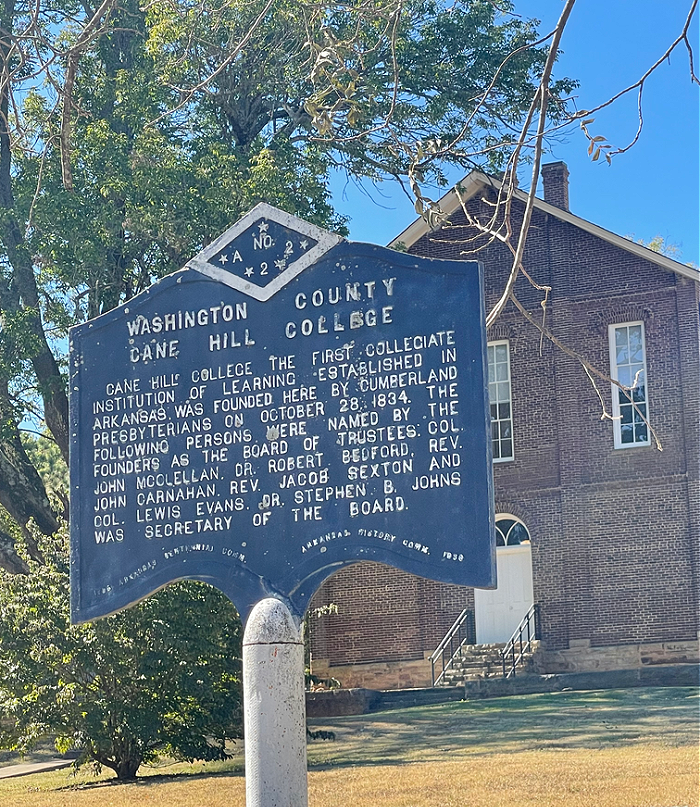
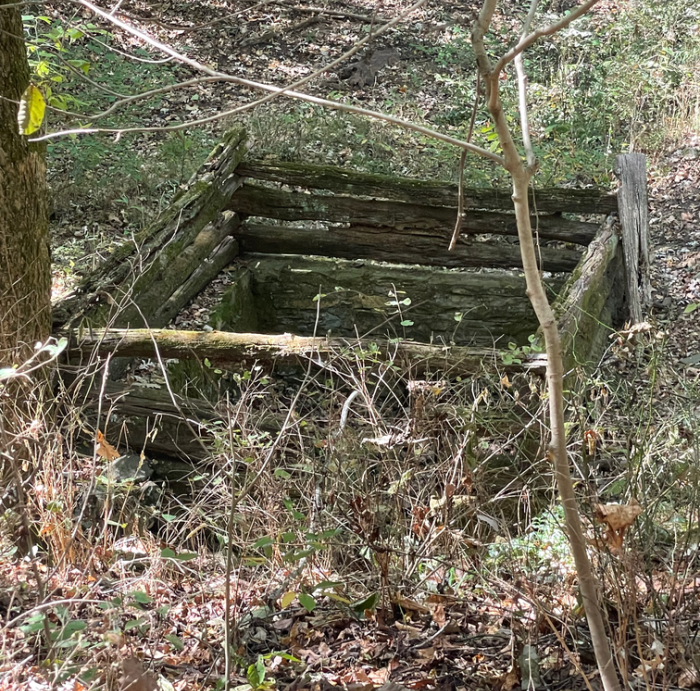
And, hidden throughout the hiking trails, evidence of the first Cane Hill settlers can be found.

Witness Tree
One of the most humbling things I saw at Cane Hill was this Trail of Tears Witness Tree.
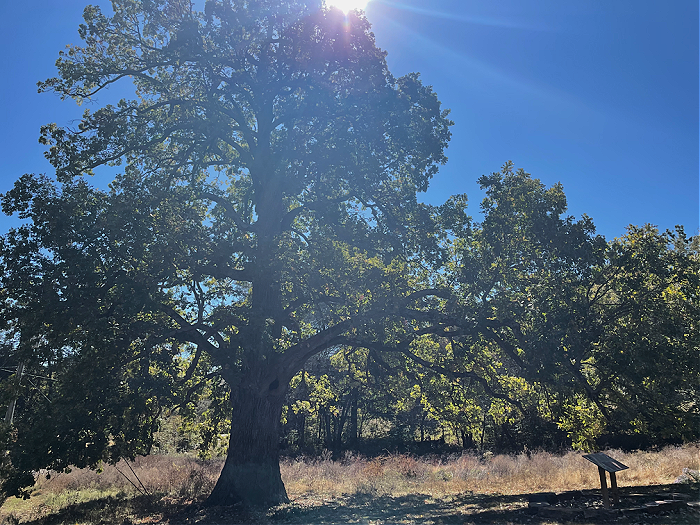
From the Cherokee Phoenix June 12, 2022:
The panel was placed under a bur oak tree, which Historic Cane Hill Public Programs Manager David Collins said was “likely” a witness to the event that occurred 183 years ago. According to the panel, bur oak trees can live up to 450 years and the one at the site is approximately 85 feet tall and has a base diameter of 25 feet.
“This tree was such an old specimen that it likely was a witness to the event,” he said. “So, we thought it would be prudent to place it (panel) here next to this tree.”
To think that this tree actually witnessed one of the darkest times in our nation…
And that I was able to touch a low-hanging branch.
Soooo, the moral of this post is to step off the beaten path and enjoy the stillness of nature during this busy time of the year. There is so much to see and feel and learn.
Happy December! And heaven and nature sing…
Grace Grits and Gardening
Farm. Food. Garden. Life.


We had a tree that blew down at our cabin in Mammoth Springs, the center of the stump hollowed out over time. We planted some ivy in the center of that stump and it is beautiful, really surprises me every spring/summer that is survives our harsh winters.
What a great way to make something beautiful out of something not so good!
That’s all so interesting Talya. My ancestor Hans Jorge Freudl came over on the boat from Germany with his 2 month old son. His wife must have died on the passage over because she is not registered like he and the son, (also namedJorge) is. They registered at the Cumberland Gap Presbyterian Church in Tennessee. The Freudl name in the US became Friddle. This info is documented in our Friddle Fabric History book. There is a map in the book that shows he settled in Shelbyville, TN and is denoted as the Friddle cave. On down the line came my great great grandfather Henry Friddle. He served in the Texas Volunteer Infantry in the Civil War. He died from measles during the war and is probably in a mass grave in Searcy, Arkansas. The only grandmother I knew was Mattie Mae Friddle and my Mom was a Friddle.