Dear Sunday Letter friends —
I can’t believe how long it’s been since my last Sunday Letter, but I’m still here. And I have an announcement…🎉
Next Book!
A couple of weeks ago, I finished the rough draft of my next book.

I’m still working on the title and cover, and when I figure those out, you’ll be the first to know. But in the meantime, can you please sigh with relief for me?
Oh, I’ve spent the last few months deep into finishing this manuscript. And when I’m pushing toward the end, lots of other things fall by the wayside. It’s all part of the process, I suppose.
This story is a sequel to The Accidental Salvation of Gracie Lee. 🚲 🚲 🚲 I said I would never write a sequel, but back in November, I started toying around with the idea. The truth is, there are several characters from Gracie Lee’s world I’ve wanted to revisit. So why not?
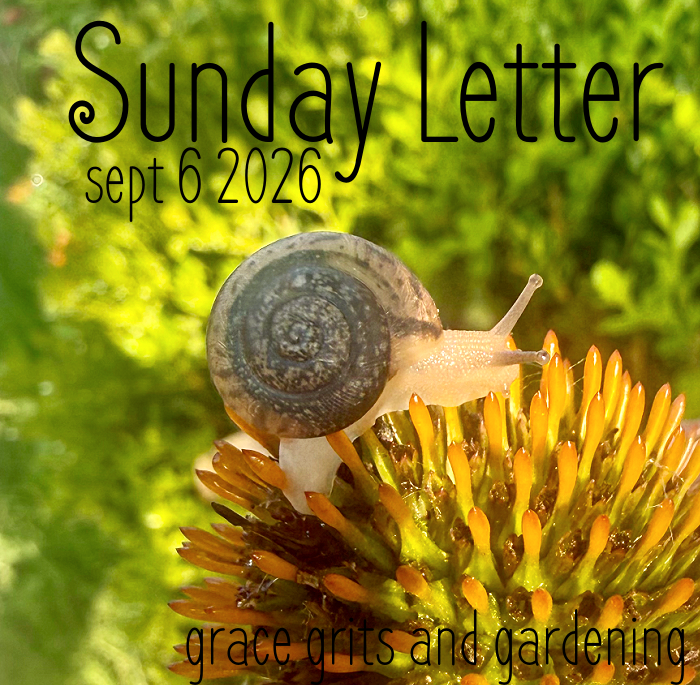
Anyway, the draft is done, and that is a huge step. As the saying goes, there can’t ever be a book without first getting words on the page. And just like the snail in the picture above, if you keep at it and ignore that ugly little voice whispering, “This is bad. Why do you put yourself through this?” you’ll reach your goal. And when you do, the view will suddenly look so different.
Soon, the real fun begins: editing! It’s my favorite part, even though it can also be incredibly frustrating at times.
But first, I’m setting the manuscript aside for a few weeks. Time and distance will help me see it with fresher eyes when I return.
And while my manuscript rests, the garden is anything but quiet.
How to Spot a Monarch Caterpillar
Fall migration is well underway, and so many monarch butterflies are visiting our milkweed right now.
One of my favorite things to do in the early mornings is search for monarch caterpillars. My trick for spotting them (they really blend in!) is to look for specks of caterpillar frass.
Frass is the official name for caterpillar poop. 😄
And frass is often easier to spot than the caterpillar itself.
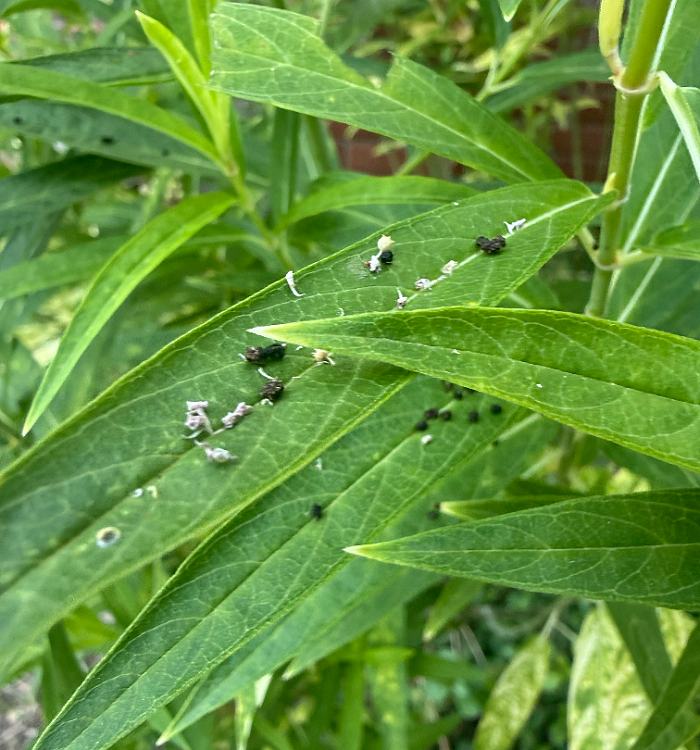
Once you spot the frass, look at the undersides of the leaves above it.
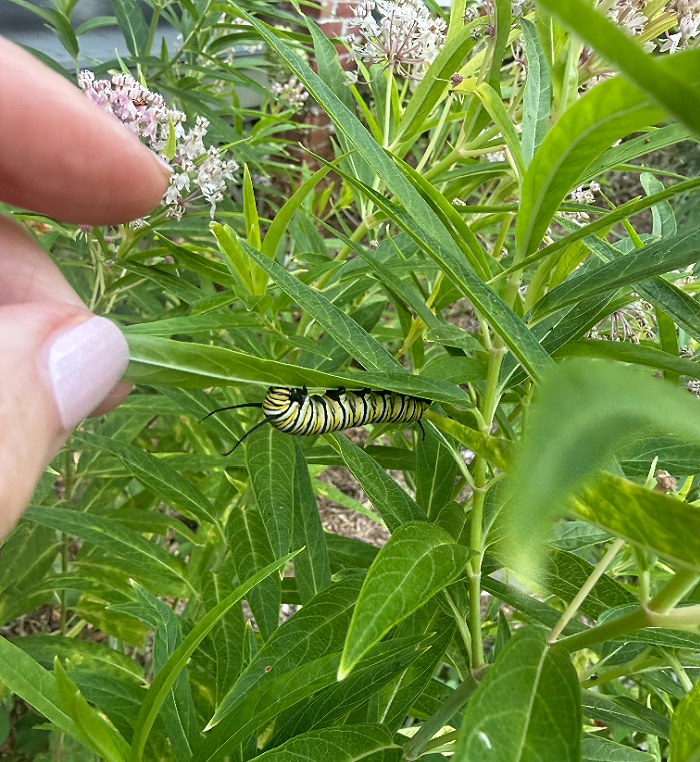
There are four monarch butterflies laying eggs on this swamp milkweed plant. Can you spot them?
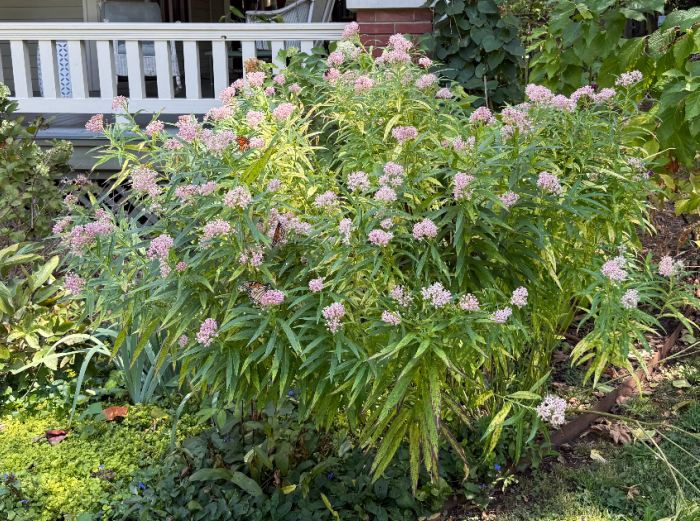
What about Spicebush Caterpillars?
I have a completely different method for spotting spicebush caterpillars.
First, you have to find one of their host plants:
- Spicebush (Lindera benzoin)
- Sassafras (Sassafras albidum)
- Sweetbay magnolia or red bay (in southern regions)
Next, look for folded-over leaves.
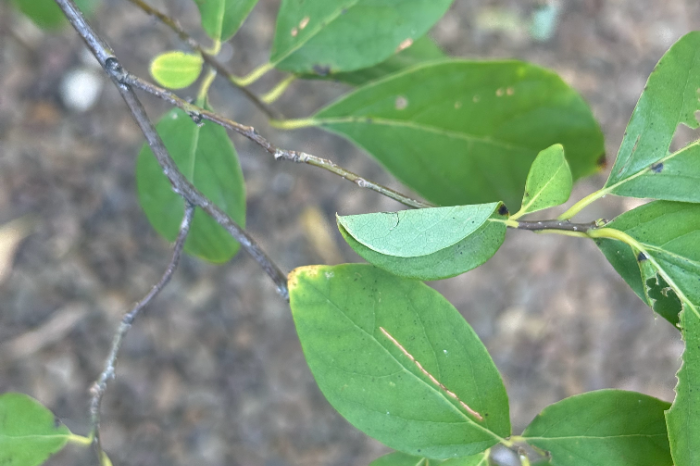
Then, carefully, carefully take a peek inside.
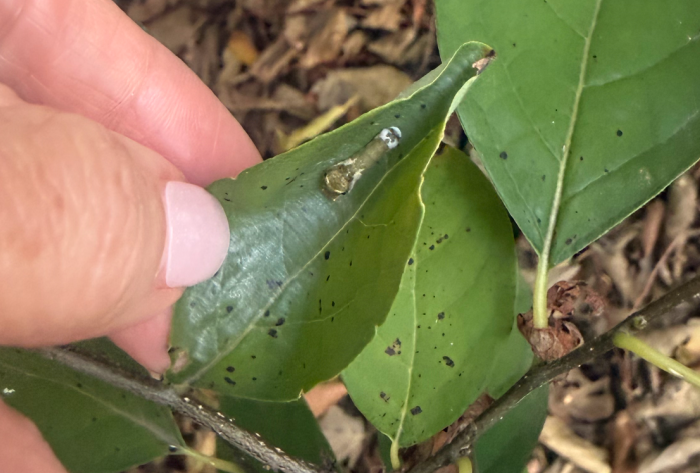
Young spicebush caterpillars look like bird droppings. Later, in their older instar phases, they look like Pixar characters. :))
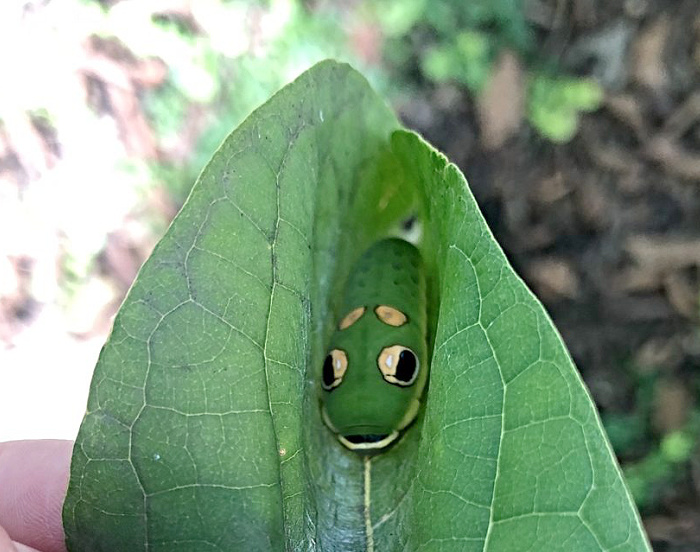
One interesting thing about spicebush caterpillars: they do not migrate south for winter. They spend their life cycles in the same general area. Sort of like me. 😊
I consider myself lucky anytime I spot either of these caterpillars. And it’s wonderful to know that even though the garden is hot and tired, it still provides important and productive habitat for so many creatures.
Writing Time!
Back in June, I spent five days in Piggott, Arkansas, at the annual summer writing retreat hosted by the Hemingway-Pfeiffer Educational Center.
What a gift it was to have five uninterrupted days devoted to writing in one of my favorite places. No appointments. No distractions. Just my manuscript, wonderful instruction from our mentor, and the quiet understanding that my only real job was to be present, learn, and let myself take it all in.
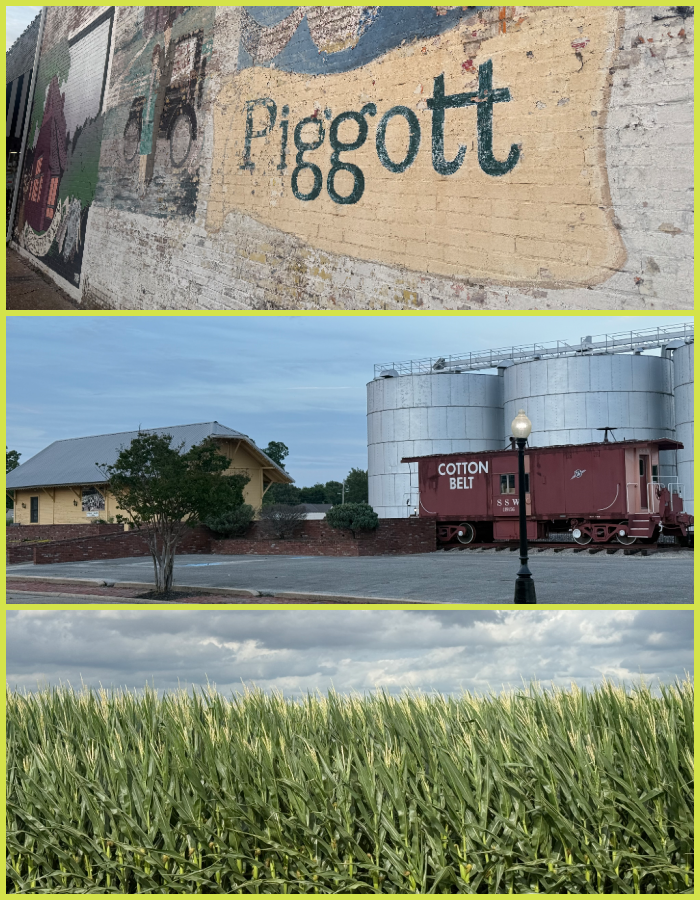
There’s something deeply comforting about writing in a place where so many stories have already been imagined, revised, and brought to life. The Hemingway barn, the Delta landscape, the rhythm of the days—it all re-inspired me at a time when I needed it.
A change of scenery really can do wonders for the soul.
Of course, I didn’t spend all my time writing. I always build time in for exploring the surrounding nature. I may have even pulled a couple of weeds in the pollinator garden…
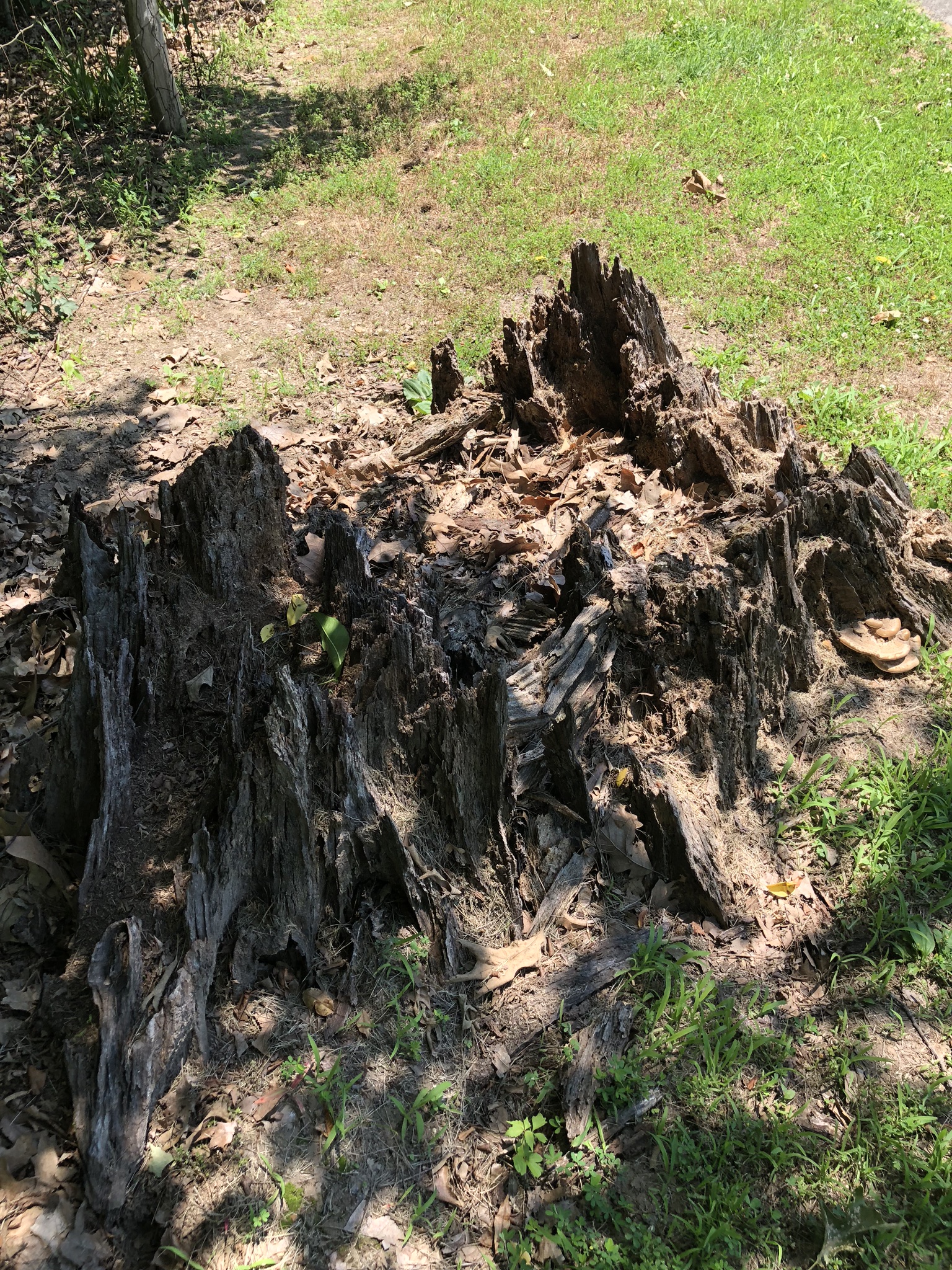
This Stump.
I look for this stump on the Hemingway-Pfeiffer grounds each time I visit. The first time I noticed it, in the fall of 2012 (I think), it was still a real stump. One I could stand on. I remember taking pictures of it, but I can’t seem to find them.
By 2016, when I took this picture, it had deteriorated quite a bit.
Ten years later, there isn’t much of the tree left.
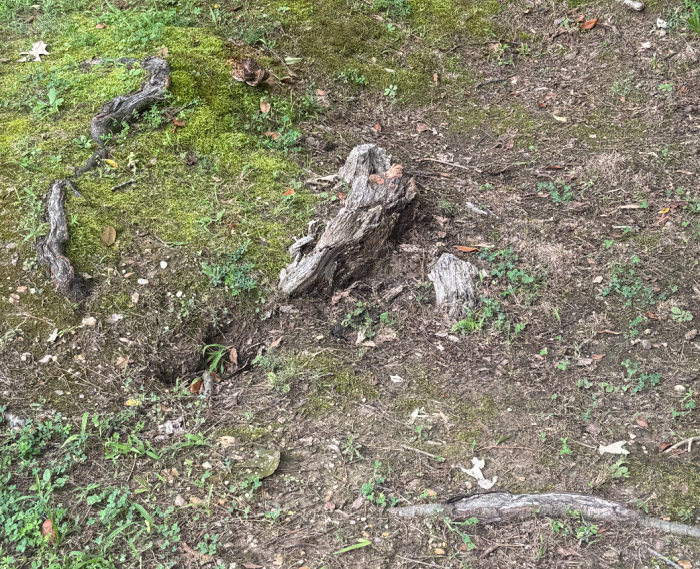
I’ve always been a fangirl of trees in all their various stages of life—even as they fade away and return to the soil.
When this one was in its prime, I like to imagine it witnessed Ernest Hemingway walking beneath its branches while pondering A Farewell to Arms, which he worked on while visiting his in-laws there.
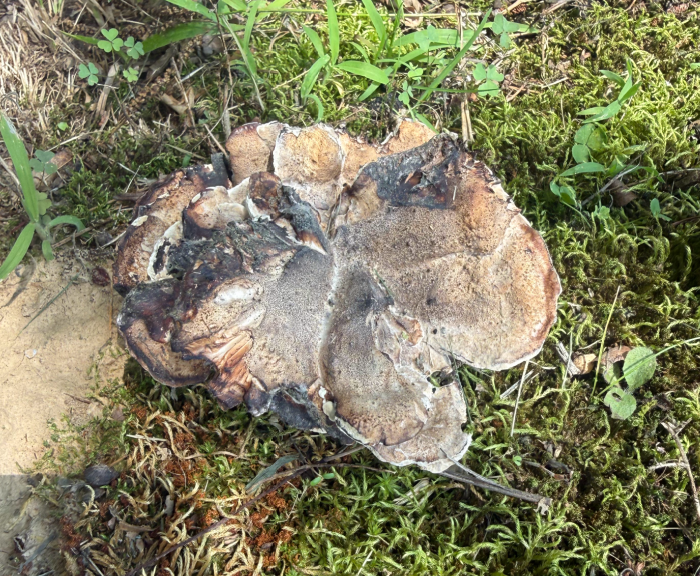
Now, fungi and lichen grow where the tree once stood—proof of its continued value.
Things Momma Says:
I’m cold natured now that I’m old.
🌻🌻🌻
Tell me about your summer; how’s it been? Here in northwest Arkansas, the past few months have been HOT AND DRY. (Who remembers the summer of 1980?? Ugh.)
But like everything seemingly unbearable, this too shall pass.
Sixteen days until fall, y’all! 🍂
Talya
Grace Grits and Gardening
Farm. Food. Garden. Life.


Here in NC it’s has been rainy, hot and humid.
We can’t buy a sprinkle of water:(((
Congratulations on finishing that first draft! You’re an inspiration.
I’m more than ready for fall days. And although I hate to say it, have a feeling it will be a while before we awaken to a crisp day.
Thanks, Dorothy! And I’m afraid you are right about the crisp day.
It is going to be a long 16 days.
Probably so…
Welcome back! I’ve missed your Sunday Letters! I love your insights on reading and also nature. I recently read The Calamity Club and Mad Mabel. Loved them both. I can’t wait to read your next installment of Gracie Lee! Happy editing!
Thank you, Elaine! I read Mad Mabel recently too. She was a character!
And I think you met at this year’s writing retreat a former student of mine from Corning, Sue? She has the funniest stories to tell.
I met Sue back in March when I taught a publishing class at HP. She was a hoot!
I always love seeing your spice bush caterpillars. Congratulations on your first draft and contention of Gracie Lee. It’s been hot and dry in Dallas. Praying for our firefighters and first responders battling the blazes in Texas.
Yes, I can’t imagine how difficult it must be for those battling blazes.
Congratulations on completing the first draft of your new book. 🎉 Can’t wait to read it and see what kind of mischief Gracie Lee is up to.
Thank you!
So glad to see A Sunday Letter. I was a little late checking in today. Anxious to read your next book. Looking forward to the fall. 😋
I’m counting down.
I’m so excited to hear about the sequel to Gracie Lee! I am currently reading The Calamity Club too. I recently read Whistler by Ann Patchett – another good one!
I enjoyed the Sunday Letter!
I’ve spent the hottest months of Spain, in my home country Denmark. Pwew! What a relief!
I am very exited to hear you decided to write a sequel to Gracie Lee! Look forward to the launch.
Thank you for still sending us your Sunday letters.
I can’t wait to visit with Gracie Lee again. Salvation still is one of my favorite books. I look forward to your title reveal.
I too just read Calamity Club and Mad Mabel. Both my kind of a good read.
I certainly remember the summer of 1980. I was 5 months pregnant, when the 100’s started early July. 🫤Here’s to impending crisp days!
Yay for fall weather!
In SW Florida it has been hot and drought. But thankfully we have had another quiet storm season so far. After the past few years it it truly a blessing to have two quiet years. I am looking forward to getting my garden started for fall/winter/spring.
I hope you have a marvelous fall garden!
Hello from upstate New York!
Happy you’re writing more about Gracie Lee. Enjoying your newsletter.
Thank you!!